As I promised, here you can find the activities aboout mummies we've gone through in class. Apart from this subject you can find other ages like Ancient Greece, Rome and so on. This site is full of games and activities (printable ones as well) to flick through and have a really joyful time. What are you waiting for then?
To go straight to hte website click on tis following link: schoolliaison.com
For downloading the Egyptian puzzle: crossword
For checking the answers of your Egyptian puzzle: Art Gallery 34
Monday, 8 February 2016
Thursday, 4 February 2016
ANIMAL FACT FILE
Where can I find handy webs for an animal fact faile for the next project? The link that you have below is the number one "GO TO" research topic for kids, teachers and librarians. Free websites that provide animal facts for kids are one of my most common requests. I have spent LOTS of time searching the Internet for websites that are easy for elementary students to navigate. I hope that this post will make your job WAY easier.
10 animal research webs for kids
Tuesday, 19 January 2016
SO & SUCH EXPLANATIONS AND PRACTICE
SO is used to emphasise an adjective, and is always used without a noun. SUCH is used in the same way, but is always used with a noun.
This apple is SO SWEET, but, This is SUCH a sweet APPLE.
SO and SUCH are used with THAT to give justification.
This apple is SO SWEET THAT I will have another one, but, This is SUCH a sweet APPLE THAT I will have another one.
SO can also be used with MUCH and MANY SO MUCH for NON COUNTABLE nouns, SO MANY for COUNTABLE nouns. SUCH MUCH and SUCH MANY don't exist.
There is SO MUCH PAINT (non countable) and there are SO MANY ANIMALS (countable).
To practice so & such with online activities: Agenda Web
To review the class Power Point on Su & Such: Power Point
Monday, 14 December 2015
ABOUT PHRASAL VERBS
What are phrasal verbs? a phrasal verb consists of a base verb, e.g. catch or look, and one or two particles
(adverb or preposition), e.g. on or to. There are three main types of phrasal verb: 1 phrasal verbs with no object (intransitive). 2 phrasal verbs which take an object (transitive) and are separable. 3 phrasal verbs which take an object but cannot be separated by the object. These verbs may have one or two particles.
To keep on reading go to the following link: Phrasal verbs types and theory
Here you can also download the power point we've gone through in class, so that you can compile vocabulary you will need further on: Power Point about phrasal verbs
Tuesday, 10 November 2015
WEATHER FORECAST
What is the weather like in your hometown during different seasons of the year (temperatures, precipitation, humidity, etc.)? With this activity you will hear the weather forecast and do some activities to check your understanding. Furthermore, you can practice for your oral presentation when you become a weather forecaster. Click on the link below and do the simple activities for futher practicing. KEEP GOING!!!
Monday, 19 October 2015
OLD WIVES' TALES
Old wives tale is an expression used to indicate that a supposed truth is actually a superstition or something untrue, to be ridiculed. It can be said sometimes to be a type of urban legend, said to be passed down by older women to a younger generation. Such "tales" are considered superstition, folklore or unverified claims with exaggerated and/or inaccurate details.
To download the Power Point for the activity click on the following link: Old Wives' tales
Wednesday, 7 October 2015
POWER POINT OF VERB PATTERNS
When we use more than one verb in a sentence there are specific
patterns, e.g. the infinitive to or –ing, that follow the first verb.Look at this example:
"My friend suggested watching a dvd at home, but I want to go out.
The verb ‘suggested’ is followed by an –ing form of the next verb (gerund) and the verb ‘want’ is followed by the infinitive to.
Certain verbs can be followed by either a gerund or the infinitive with a difference in meaning. Some of these verbs are: forget, remember, stop, try.
Look at the first example:
"I forgot to say goodbye" Explanation: I didn’t say goodbye.
"I forgot saying goodbye" Explanation: I said goodbye, but I can’t remember that I did.
To download the PPT of the unit go to the link
For ann activity online: BBC flatmates
For a complete list of different verb patterns: Verb patterns list
In
English we have many rules when it comes to using two verbs together in
the same phrase. Verb patterns are the way you are going to use the
second verb when it is dependent on the first verb. For example:
What’s so difficult about that???
Sure, it seems quite easy so far, but the verb “like” is an example of a verb that can be used with either form and the meaning doesn’t change. If I was to change the first verb from “like” and use the verb “stop,” this same rule, or pattern, would not be the same and the meaning would change. For example:
So, now you can see that depending on the first verb that I use, I have to know what form I will use with the verb that follows.
- See more at: http://reallifeglobal.com/english-grammar-made-easy-how-to-use-verb-patterns/#sthash.144M702g.dpuf
I like drinking green tea after dinner or I like to drink green tea after dinner
In this example you’ll see that in one of them I am using the “ing
form” and in the other I’m using the “to infinitive.” In this example
both forms are correct and both forms mean the exact same thing.What’s so difficult about that???
Sure, it seems quite easy so far, but the verb “like” is an example of a verb that can be used with either form and the meaning doesn’t change. If I was to change the first verb from “like” and use the verb “stop,” this same rule, or pattern, would not be the same and the meaning would change. For example:
I stopped drinking water when exercising or I stopped to drink water when exercising
In this example, both phrases are correct but they have different
meanings. In the first, I have stopped the activity of “drinking water,”
and in the second, I have stopped what I was doing (exercising) to
drink water.So, now you can see that depending on the first verb that I use, I have to know what form I will use with the verb that follows.
- See more at: http://reallifeglobal.com/english-grammar-made-easy-how-to-use-verb-patterns/#sthash.144M702g.dpuf
Wednesday, 30 September 2015
CREATE AVATARS AND REVISE VOCABULARY
Do you want to create your own avatar? This is what we've done in class. Good stuff to revise parts of the body and adjectives to describe people's appearance for this UNIT 1. Furthermore, if you have a facebook account you can tune it with your created avatar. Go ahead, it's good fun!! To go to this website click on this link: Create an avatar
Or on this other: Downloadable avatar
This link will download the avatars yau've made in class to practice your description. You'll also find some handy vocabulary. Click on it and... do your best!!!
1º ESO class avatars
Sunday, 27 September 2015
Verb to be online activities and games
The verb to be is the most irregular verb in the English language. It is normally a linking verb showing existence or the condition of the subject. It can also be used as an auxiliary verb when forming the passive voice. In this entry you will find some activities online for practising and games which help you consolidate this structure. HAVE SOME FUN!!ç
For activities online, visit the following sites:
For to be games:
Wednesday, 16 September 2015
STATIVE AND DYNAMIC VERBS
Verbs in English can be classified into two categories: stative verbs and dynamic verbs. Dynamic verbs (sometimes referred to as "action verbs") usually describe actions we can take, or things that happen; stative verbs usually refer to a state or condition which is not changing or likely to change. The difference is important, because stative verbs cannot normally be used in the continuous (BE + ING) forms. This will explain the differences between the two types of verb, and give lots of examples of each kind.
If you wnat to have some practice on this with some exercises and their key, download this document: Dynamic and stative verbs: rules, examples, exercises and answers
For some practice online, visit this website: My English pages.Or this other one: Perfect English grammar
For some online translation practice in Present Simple/Continuous: check this other site: Translation in English
To download your homework: Stative verbs homework
Tuesday, 15 September 2015
PRESENT SIMPLE VS. PRESENT CONTINUOUS
In this lesson we are going to compare the present simple and present continuous tense. We are going to study the differences and do exercises together. It is a very common problem to confuse these to tenses.
Many students from Spain have problems in choosing the correct form of the verb when we talk about the “present”. Such problems arise because they translate from Spanish to English directly without paying attention to the communicative uses.
Here you can find exercises where you must work on the recognition between the two presents, both simple and continuous, and we'll check them out in class on Tuesday. GOOD LUCK!!
To download the activities: Present Simple vs. Present Continuous exercises
STATIVE VERBS LIST
Some verbs are only (or mostly) used in simple tens es, and are not used in continuous tenses. An example of a simple tense is the present simple, or the past simple. An example of a continuous tense is the present continuous or past continuous. These verbs are called stative, or state verbs. A verb which isn’t stative is called a dynamic verb, and is usually an action. Often stative verbs are about liking or disliking something, or about a mental state, not about an action.
To download the stative verbs list, go to the following link: Stative Verbs List
For online activities:
Exercise 1
Exercise 2
Exercise 3
Exercise 4
Sunday, 7 June 2015
BIKE SAFETY
It's a beautiful day — the sun is shining, the birds are chirping. What could be more perfect than a bike ride? But wait! Before you pull your bike out of the garage, let's find out how to stay safe on two wheels.
To you, that you ride a bike and enjoy long rides, here you have interesting tips for you to move completely calm, wherever you go. On wheels we go faster and we must also be more secure. Do you know how? Then answer these quizes!
Friday, 29 May 2015
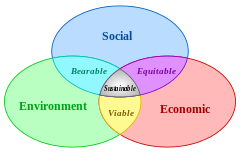
GLOBAL CITIZENSHIP & SUSTAINABLE DEVELOPMENT
The term "citizenship" refers to an identity between a person and a city, state or nation and their right to work, live and participate politically in a particular geographic area. When combined with the term "global", it typically defines a person who places their identity with a "global community" above their identity as a citizen of a particular nation or place. The idea is that one’s identity transcends geography or political borders and that responsibilities or rights are or can be derived frommembership in a broader class: "humanity".
Sustainable development is a process for meeting human development goals while sustaining the ability of natural systems to continue to provide the natural resources and ecosystem services upon which the economy and society depend. The modern concept of sustainable development is derived most strongly from the 1987 Brundtland Report. Sustainable development is the organizing principle for sustaining finite resources necessary to provide for the needs of future generations of life on the planet.''Climate change is destroying our path to sustainability. Ours is a world of looming challenges and increasingly limited resources. Sustainable development offers the best chance to adjust our course.'' Ban Ki-moon
For downloading the Conceptual Map: Global Citizenship and Sustainable Development (Spanish)
Sunday, 24 May 2015
PRESENT CONTINUOUS FOR FUTURE + BE GOING TO
We often use the present continuous tense to talk about the future. Of course, we normally use the present continuous to talk about action happening in the present, but if we add a future word, we can use it to talk about the future. (By "future word" we mean words or expressions like tomorrow, next week, in June. The future word may be clearly expressed or understood from the context.)
Sometimes there is no real difference between an intention (going to) and a plan (present continuous). In this case, it doesn't matter which we use.
For good practice go to these websites:
To be going to practice
Present Continuous for future practice
Just for fun:
British council teens
To be going to practice
Present Continuous for future practice
Just for fun:
British council teens
Saturday, 23 May 2015
Thursday, 14 May 2015
KIDS & CONSUMERISM
The market for children’s products and food is enormous. Parents on the one hand have a hard time raising children the way they want to, while on the other hand, kids are being increasingly influenced by commercialism that often goes against what parents are trying to do.
Even in industrialized societies, where governments and campaigners fight for better child advertising standards and regulations, or improved food quality, industry fights back preferring self-regulation (which rarely happens, or is intentionally weak), and arguing that it is individual choices and parents that are the issue.
For the activity we have worked on in class, watch this video and answer the questions in the handout: Kids & Consumerism handout
Sunday, 19 April 2015
PRESENT SIMPLE vs. PRESENT CONTINUOUS WRITING TASK AND PPT
What's the difference between the Present Simple and Present Continuous and how to use them? That's the big issue we are going through these last lessons:
As we said in class we use the present simple tense when we want to talk about fixed habits or routines – things that don’t change. However, we use the present continuous to talk about actions which are happening at the present moment.
Compare these two statements:
I play tennis / I am playing tennis.
I play tennis tells us that playing tennis is something the speaker always does. It is part of a routine or habit. We can call this a permanent situation. I am playing tennis tells us that the speaker is playing tennis right now. We call this a temporary situation.
For next writing task you must write a description of these four people on the slides above. On the left you can see what their profession is and on the right what they are doing in this moment. Pretty like the four stories we have done in class.
In the following post you can download the Power Point we have dealt with in class with all the activities this doc contains. Present Simple vs. Present Continuous
Wednesday, 15 April 2015
COMPARATIVES AND SUPERLATIVES
Comparatives and Superlatives are special forms of adjectives. They are used to compare two or more things. Generally, comparatives are formed using -er and superlatives are formed using -est. This page will explain the rules for forming regular comparatives and superlatives, and also show some basic ways of using them. In this unit 6 we are practising comparatives and superlatives. We have gone through a wide variety of structures that focus on the use of comparisons.For the homework sent in class go through some of the exercises you will find in this lot of photocopies you can download at a click.
English homework: comparative and superlative exercises
For further practice you have some websites which have nice and useful practice. Click on the links below and have a go.
World records website
Interesting websites
Friday, 27 March 2015
How to Write a Horror Story, Writing Horror
Horror stories can be as fun to write as they are to read. A good horror story can gross you out, terrify you, or haunt your dreams. Because horror stories depend on the reader believing in the story enough to be scared, disturbed, or disgusted, they can be tricky to write well. But like any fiction genre, horror can be mastered with the right planning, patience, and practice. If you want to learn how to chill the blood and raise goose bumps with a great horror story, then look no further.
Sunday, 15 March 2015
WRITING PLANS - HOW TO BECOME MORE EFFICIENT IN YOUR ESSAYS
Before you even begin writing the first sentence of your essay, you need to plan your essay. Planning is vital too to enable you to produce a first-class essay. The plan gives your essay a clear structure. Without this you're likely to lose your ideas, and if examinators can't see why your arguments are relevant, or they can't see what you're doing and why, they cannot give you marks, no matter how good your work might be.
By rehearsing your ideas in detail you will avoid the problem of trying to do the two most difficult things in writing at the same time: pinning down your ideas clearly, and then summoning up the words and phrases that will convey them accurately.
Spend the first ten minutes writing down your plan before you begin to write the essay. Don't get panicked into writing too soon before you have exhausted all of your ideas and got them organised into a coherent, well structured plan, that answers the question with strict relevance.
To download the writing plan (next writing task) - The bank robbery
To download the writing plan template - template
To download tips for checking your writing - Check that you have done all these things
To download a self-correction template
Subscribe to:
Posts (Atom)