Showing posts with label English 4 ESO. Show all posts

Sunday, 27 April 2025

WOULD VS. USED TO GRAMMAR TIPS AND EXERCISES


When we talk about things in the past that are not true any more, we can do it in different ways.

We can use used to to talk about past states that are not true any more.

We used to live in New York when I was a kid.
Did you use to have a garden?

We can use would to talk about repeated past actions that don't happen any more.

Every Saturday I would go on a long bike ride.
My dad would read me amazing stories every night at bedtime.

in order to get some practice, try these exercises:

Used to & Would 1

Used to & Would 2

Used to & Would 3


Wednesday, 23 March 2022

REPORTED SPEECH GAMES - WORDWALL

Interactives and printables

Explore the different ways of using indirect speech with Wordwall.

Wordwall can be used to create both interactive and printable activities. Most of our templates are available in both an interactive and a printable version.


Interactives are played on any web-enabled device, like a computer, tablet, phone or interactive whiteboard. They can be played individually by students, or be teacher-led with students taking turns at the front of the class.

Printables can printed out directly or downloaded as a PDF file. They can be used as a companion to the interactive or as stand-alone activities.

Reported speech Liveworksheets: activity 1 / activity 2


Link to go to the Reported Speech games: Wordwall Community


Monday, 16 November 2020

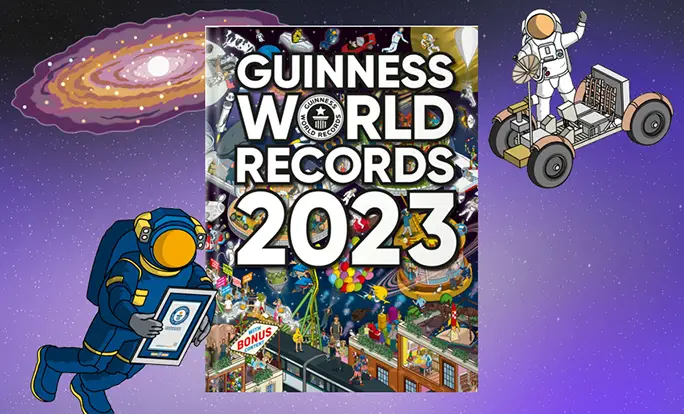
BEST OF THE NEW GUINNES WORLD RECORDS 2023

Guinness World Records is the official reference, and ultimate authority, for world records. Distributed in more than 100 countries and translated into 20 languages, the Guinness World Records annual is one of the best-selling books of all time!
It aims to inspire ordinary people to do extra-ordinary things. Our mission is to entertain and inform, and to celebrate the world’s best.

To download the worksheet: Quiz
To go to the oficial website: guinnessworldrecords.com 
To go to the video of SPOTLIGHT - Most dominoes toppled in a 3D pyramid
For another video: GWR 2017

Tuesday, 3 October 2017

WRITING SELF-CORRECTION CODE

This is a common tool to optimise learning opportunities from mistakes students make in written homework and to encourage the self-correction to get to know the mistakes and do not repeat them any longer. I'll show you where the mistakes are and what kind they are, and then you must try to correct them as a second stage to the initial writing task. The codes shown here is what you might find in your writing all over this course. It's your task to find them and correct them properly.

Click on the following link: Writing self-correction code

Sunday, 30 April 2017

BURLINGTON EXTRA MATERIAL

Welcome to Burlington Books Spain. The website tailor-made for teachers and students of English in Spain!

The Catalogue section enables you to browse
through Burlington Books' full catalogue of printed publications and digital products. For a presentation of our New Books, click on the orange icon.

If you are a teacher using Burlington Books, you may join our exclusive Teacher's Zone. This will give you access to a wealth of resources to help you in the classroom, including handy MP3 recordings and the programaciones for our coursebooks.

For your students, there is the Student's Zone, where they will find resources for their coursebook and readers, such as MP3 recordings, extra exams, interactive games and activities to practise their English at home.

Visit our site often to keep up to date with our new materials: Burlington extra material

COURSE NOTICES

In connection with the 2017-2018 school year, I have highlighted some interesting information for students and families: course organization, class does and don'ts, assessment criteria... Very clear document where you can find the essential points for this year's course. In case of any questions, contact me.

Course notices

Thursday, 23 February 2017

THIRD CONDITIONAL FORMS

We can use the Third Conditional to talk about 'impossible' conditions, impossible because they are in the past and we cannot change what has happened: If I had worked harder at school, I would have got better grades.

Notice that the main clause can contain 'would', 'could' or 'might: If I had seen him at the meeting, I would have asked him. (But he wasn't there so I didn't.)

Also notice that sometimes the 'if clause' is implied rather than spoken:
I'd have done it. ("if you had asked me but you didn't.")
I wouldn't have said that. ("if I'd been there.")


To download the class power point: All conditional forms

WORKLIVESHEETS:


FIRST AND SECOND CONDITIONALS

English grammar practice exercise, for pre-intermediate and intermediate level. In this exercise you will practise the difference between first conditional and second conditional sentences.

To download the class Power Point: All conditionals Power Point

See the common mistakes when building First and Second conditionals and practice it with some exercises online: speakspeak 

For  more sites: AgendaWeb 
Tutorial fof conditionals + online exercises: English Page Conditionals

MODAL VERBS

A modal is a type of auxiliary (helping) verb that is used to express: ability, possibility, permission or obligation. Modal phrases (or semi-modals) are used to express the same things as modals, but are a combination of auxiliary verbs and the preposition to.
Modals are special verbs which behave very irregularly in English. In this post you will find the modal explanations and complete the associated exercises and take another step toward English fluency. 
If you want to practice Modal Verbs online Click Here .

For more online practice go to the following link: Modal Verbs or AgendaWeb

If you want to check the modal verb list and their different use, download this document: modals summary chart
To review exercises on the Power Point we have gone through in class, see this link: Modal Verbs Power Point

ZERO CONDITIONAL

We use the zero conditional when the result of the condition is always true, like a scientific fact.
Notice that we are thinking about a result that is always true for this condition. The result of the condition is an absolute certainty. We are not thinking about the future or the past, or even the present. We are thinking about a simple fact. We use the Present Simple tense to talk about the condition. We also use the Present Simple tense to talk about the result. The important thing about the zero conditional is that the condition always has the same result.

If you want to practice this conditional, click on the following exercises:

There are more activities in the following site: Agendaweb

Wednesday, 22 February 2017

FUTURE TENSE

There are several different ways in English that you can talk about the future. This page is an introduction to the most important ones.

Simple Future has two different forms in English: "will" and "be going to." Although the two forms can sometimes be used interchangeably, they often express two very different meanings. These different meanings might seem too abstract at first, but with time and practice, the differences will become clear. Both "will" and "be going to" refer to a specific time in the future.

As I stated in class, in this post you can find the activities you have to do for homework. The first with the sentences you have to make up and the second a fill-in-the-gaps exercise.

To download the photocopy future uses
To download the photocopy fill-in-the-gaps
To download the Power Point seen in class: Future tenses Power Point

For being directed to a future website with exercises, try the following link: English page
For other sites with GOING TO & WILL online activities: agendaweb; englishgrammarsecrets

Wednesday, 16 November 2016

PRESENT PERFECT CONTINUOUS

Some people think the present perfect continuous is difficult to use, but really it's not very complicated, and it sounds very impressive when you use it correctly. 

As I told you in class, here you have the cartoon strips where you have to come up with the sentences. Remember, make a sentence in Present Perfect Simple and another sentence in Present Perfect Continous, applying the rules we have seen in the Power Point. I also leave the slides we have been working with in class for you to download. CLICK ON THE PICTURE TO MAKE IT BIGGER!!

Download the Power Point: Present Perfect Continous

For reviewing the uses of Present Perfect Continuous you can also go to this site and practice with some exercises online: Perfect English Grammar
And this other one: English Grammar Online

Sunday, 13 November 2016

PAST PERFECT SIMPLE VS. CONTINUOUS

The past perfect tense is often used in English when we are relating two events which happened in the past. It helps to show which event happened first. This page will explain the rules for forming and using the tense.

Forming the past perfect tense: This tense is formed using two components: the verb HAVE (in the past tense), and the past participle form of a verb. With a regular verb the past participle ends with -ED (just like the simple past). Irregular verbs have a special past participle form that you have to learn. 

Example: I wanted to live in a foreign country, so I applied for a job in Japan. Judy had lived in Japan, so I called her to find out more about the culture and lifestyle there. (Judy no longer lived in Japan — she returned from there before I applied for the job.)

Click on the link to download the homework: English Homework

For more explanations and activities online: British council, Englishpage
For lots of graded activities online: Agendaweb, e-grammar

Sunday, 2 October 2016

FUTURE CONTINUOUS & FUTURE PERFECT

The future continuous (will be + ‘ing’ form) and the future perfect (will have + past participle) tenses are used to talk about events in the future. We use the future continuous to talk about something that will be in progress at or around a time in the future.

We use the future perfect to say that something will be finished by a particular time in the future. We often use the future perfect with ‘by’ or ‘in’. ‘By’ means ‘not later than a particular time’ and ‘in’ means 'within a period of time’. We don’t know exactly when something will finish.

To download the class Power Point: Class Power Point
For further practice: Future Power Point

Oxford University: Future continuous and future perfect
English Page: 

Tuesday, 27 September 2016

INCREASING AND DOUBLE COMPARATIVE

Comparison and contrast are expressed by the use of the…the… with comparative adjectives in parallel clauses. This structure is used to show proportionate increase or decrease.
The more adventurous it is, the more I like it. (NOT The more it is adventurous, the more I like it.)

A short form of this structure is used in the expressions

the more the merrier
‘How do you like your coffee?’ ‘The stronger the better.

We also use expressions like easier and easier and more and more to show gradual increase. It's important to say that something is increasing all the time. 

He was driving faster and faster.
It kept raining harder and harder
As he was explaining it I got angrier and angrier

If you want to practice with online activities:
Double comparatives: ESLlounge or Oxford University
Increasing comparatives: TolearnEnglish or agendaweb

TO download the PPT about comparatives and superlatives: Power Point

Thursday, 26 May 2016

HAVE/GET SOMETHING DONE - CAUSATIVE SENTENCES

Causative sentences show that somebody/something is indirectly responsible for an action. The subject doesn't perform the action itself, but causes someone/something else to do it instead. For example:
- Yesterday I had my hair cut.
I didn't cut my own hair, but I made someone else do it for me instead - I "caused" them to cut my hair.
By using the causative sentence takes attention away from the doer of the action, and gives more attention to the action being done. It sounds polite and professional. Get is often used instead of have. For example:
- I got my computer fixed - I had my computer fixed. (These two sentences mean the same thing).ç
Causative verbs are often used with negative experiences. In these situations it's more common to use have. For example:
- I had my wallet stolen. (I didn't actually cause my wallet to be stolen - someone stole my wallet from me)

To practice this structure follow these links.
UsingEnglish
Englishpage

Sunday, 1 May 2016

REPORTED SPEECH EXPLANATIONS AND PRACTICE

There are two ways of relating what a person has said: direct and indirect.
In direct speech we repeat the original speaker’s exact words: He said, “I have lost my umbrella.”
Direct speech is found in conversations in books, in plays and in quotations.
In indirect speech we give the exact meaning of a remark or a speech, without necessarily using the speaker’s exact words:
He said (that) he had lost his umbrella.
Indirect speech is normally used when conversation is reported verbally, though direct speech is sometimes here to give a more dramatic effect. When we turn direct speech into indirect, some changes are usually necessary. In this entry you can see the rules and changes of Reported Speech and some exercises with the key. Have a nice practice:
Reporting questions (and key)
Reporting commands and requests (and key)
Reporting statements (and key)

Class Homework

Power Point seen in class

To practice with some online activities: agendaweb reported speech
Another site: Perfect English Grammar
Last site: English-hilfen

Wednesday, 13 April 2016

IDIOMS

Every language has its own collection of wise sayings. They offer advice about how to live and also transfer some underlying ideas, principles and values of a given culture / society. These sayings are called "idioms" - or proverbs if they are longer. These combinations of words have (rarely complete sentences) a "figurative meaning" meaning, they basically work with "pictures". 

in this Power Point you will find a list of commonly used idioms and sayings (in everyday conversational English), can help to speak English by learning English idiomatic expressions. This is a list, which contains exactly 12 of the idioms we have gone through in class.

Tuesday, 19 January 2016

SO & SUCH EXPLANATIONS AND PRACTICE

SO is used to emphasise an adjective, and is always used without a noun. SUCH is used in the same way, but is always used with a noun. 
This apple is SO SWEET, but, This is SUCH a sweet APPLE. 

SO and SUCH are used with THAT to give justification. 
This apple is SO SWEET THAT I will have another one, but, This is SUCH a sweet APPLE THAT I will have another one. 

SO can also be used with MUCH and MANY SO MUCH for NON COUNTABLE nouns, SO MANY for COUNTABLE nouns. SUCH MUCH and SUCH MANY don't exist. 
There is SO MUCH PAINT (non countable) and there are SO MANY ANIMALS (countable).

To practice so & such with online activities: Agenda Web
To review the class Power Point on Su & Such: Power Point